A library without open doors is not a library in the old sense. It may still hold books, computers, and quiet tables, but when access depends on a swipe card...
A library without open doors is not a library in the old sense. It may still hold books, computers, and quiet tables, but when access depends on a swipe card, the public begins to ask a hard question: who is this space really for? That is the point at the center of the current debate, and it explains why the quote from a former employee landed so sharply. “Nobody wants a key card-access library,” the former worker said. “So everyone that I talk to ... is ready to support the libraries.”
That reaction is not just sentimentality. It reflects a real conflict over public access, staffing, security, and the civic role of libraries in local communities. Some officials and administrators see restricted entry as a practical answer to theft, loitering, or staffing gaps. Many residents see something else: a quiet retreat from public service, dressed up as efficiency. Frankly, that tension is the whole story.
Key Takeaways:
- Key card access changes more than entry; it changes the meaning of a library.
- Support for libraries often grows when residents feel public space is shrinking.
- Security concerns are real, but blanket restrictions can punish ordinary patrons.
- The dispute is about public trust, not just doors and locks.
- The bigger issue is whether civic institutions still assume the common good matters.
What is a key card-access library?
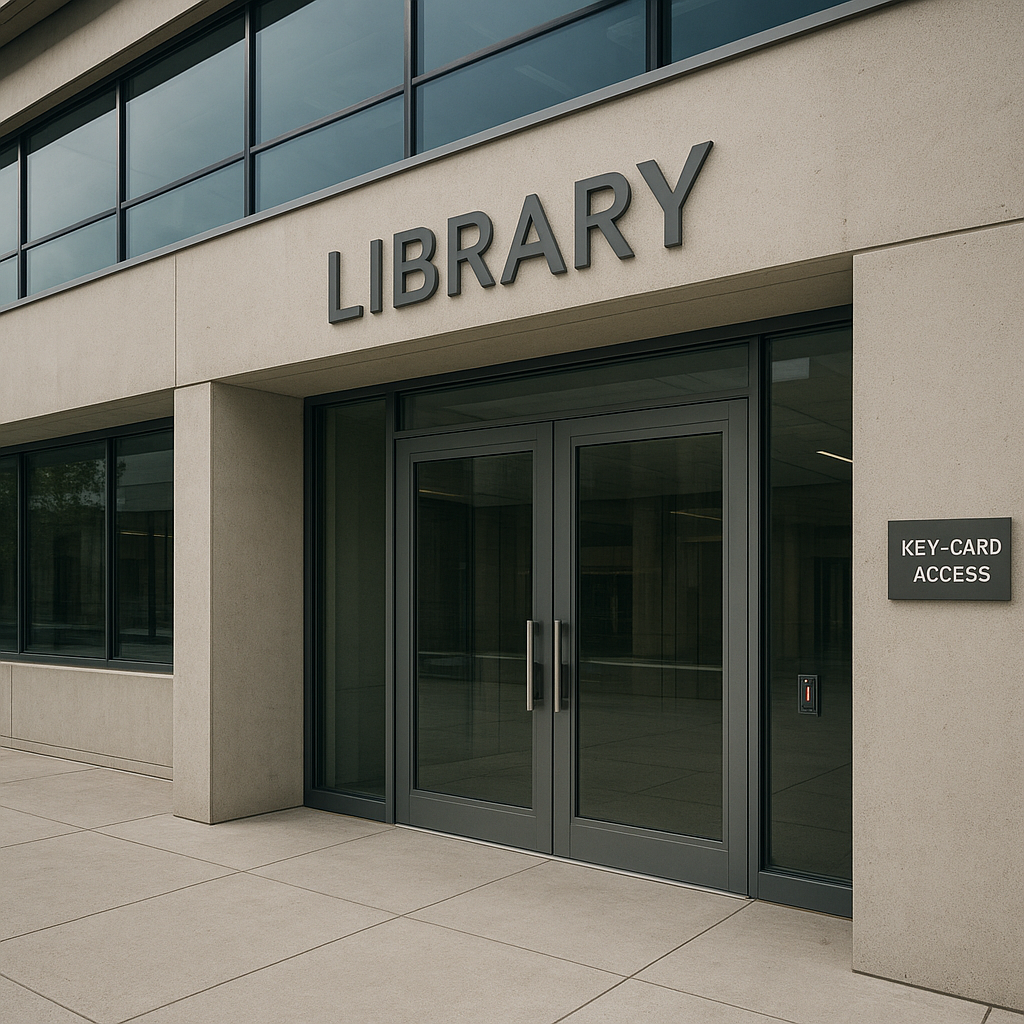
A key card-access library is a branch or facility that limits entry through badge, card, or code-based systems rather than open public doors during broad operating hours. In plain English, you need permission to get in. That can mean after-hours access for registered users, partial access for certain services, or a fully controlled entry model that keeps the public out unless someone authorizes it.
That sounds tidy on paper. It rarely feels tidy on the ground.
Libraries have long been treated as one of the last truly public institutions: not quite government offices, not quite schools, not quite community centers, but a place where anyone can enter without buying a ticket. That matters. It matters for children, job seekers, students, older adults, and people who need a warm place to sit with no questions asked. When access becomes conditional, the library shifts from shared civic ground to managed property.
I’ve covered local government disputes long enough to know this pattern: officials often frame access changes as “modernization,” while residents hear “restriction.” Both sides are usually reacting to something real. The library system may be dealing with vandalism, behavioral problems, or rising costs. Patrons may be dealing with reduced hours, fewer staff, or the quiet disappearance of a public good they assumed was stable.
Most news coverage misses the real story. It focuses on the lock, not the logic behind it. The key question is not whether a card reader works. It does. The question is whether a library still functions as a shared place when access is narrowed to the point of gatekeeping.
That is where the moral layer shows up, whether people like the phrase or not. Public institutions carry duties of stewardship. They are not private clubs. They exist for the common good, and that includes the dignity of people who have little power, few options, and a deep need for spaces that do not require status checks. A civic building that treats ordinary residents as risks first and users second starts to lose its purpose.
For background on how public institutions handle access, readers can also see our reporting on public services access policies, local government funding pressures, and community safety in public spaces.
Core details and context
The controversy over key card-access libraries usually comes down to five moving parts. And yes, the details matter.
- Security: Officials often cite theft, damage, misuse of facilities, or safety concerns. That part is not fantasy. Libraries, especially in dense urban areas, do deal with real problems.
- Staffing: When budgets are tight, administrators may reduce staffed hours and rely more on access controls. The pitch is simple: fewer people, more technology. The result is often less human contact.
- Public trust: Residents tend to distrust changes made without clear explanation. If a library is “public,” why does it suddenly need a checkpoint?
- Equity: Not everyone has a phone, card, ID, reliable internet, or a calm relationship with bureaucracy. Those who need libraries most can be the first excluded by stricter systems.
- Mission drift: Once a library adopts access restrictions, the institution may slowly act less like a universal service and more like a controlled facility.
Here’s the kicker: security and openness are not opposites. They can be balanced. But balance takes work, staffing, and honest policy. It is easier to install a card reader than to hire enough librarians, social workers, security staff, and maintenance crews to keep a branch open and orderly. That is the political temptation. It is also why residents bristle.
When I analyzed similar disputes in other cities, the pattern was usually the same. Decision-makers began with a real concern, then moved to a blunt tool, then acted surprised when the public objected. People do not like being treated as potential liabilities. Strange concept, apparently.
There is also a budgeting story hiding inside the access story. A library that depends too heavily on card access may be signaling that the municipality is trying to do more with less, and not in the noble sense. If elected leaders underfund libraries, they create the very conditions that make restrictive access seem necessary. That is not strategy. That is managed decay.
For readers tracking similar municipal trade-offs, see how budget cuts reshape public services and how access-control systems are spreading in civic buildings.
There is a broader civic issue, too. Libraries are often one of the last places where a person can enter without being monetized. No one is trying to sell you a sandwich before you read a newspaper. No one checks your credit score before you sit down. That is not trivial. A society that forgets how to make room for the weak and the overlooked tends to cheapen everything else as well.
Timeline and what actually happened
This kind of dispute usually unfolds in stages. The public hears about it late, because that is how these things go.
- Operational strain appears. Staff shortages, vandalism, overcrowding, or safety complaints begin to pile up. The branch still functions, but only barely.
- Administrators propose controlled access. The card system is presented as a compromise. Officials say it will preserve access while reducing risk.
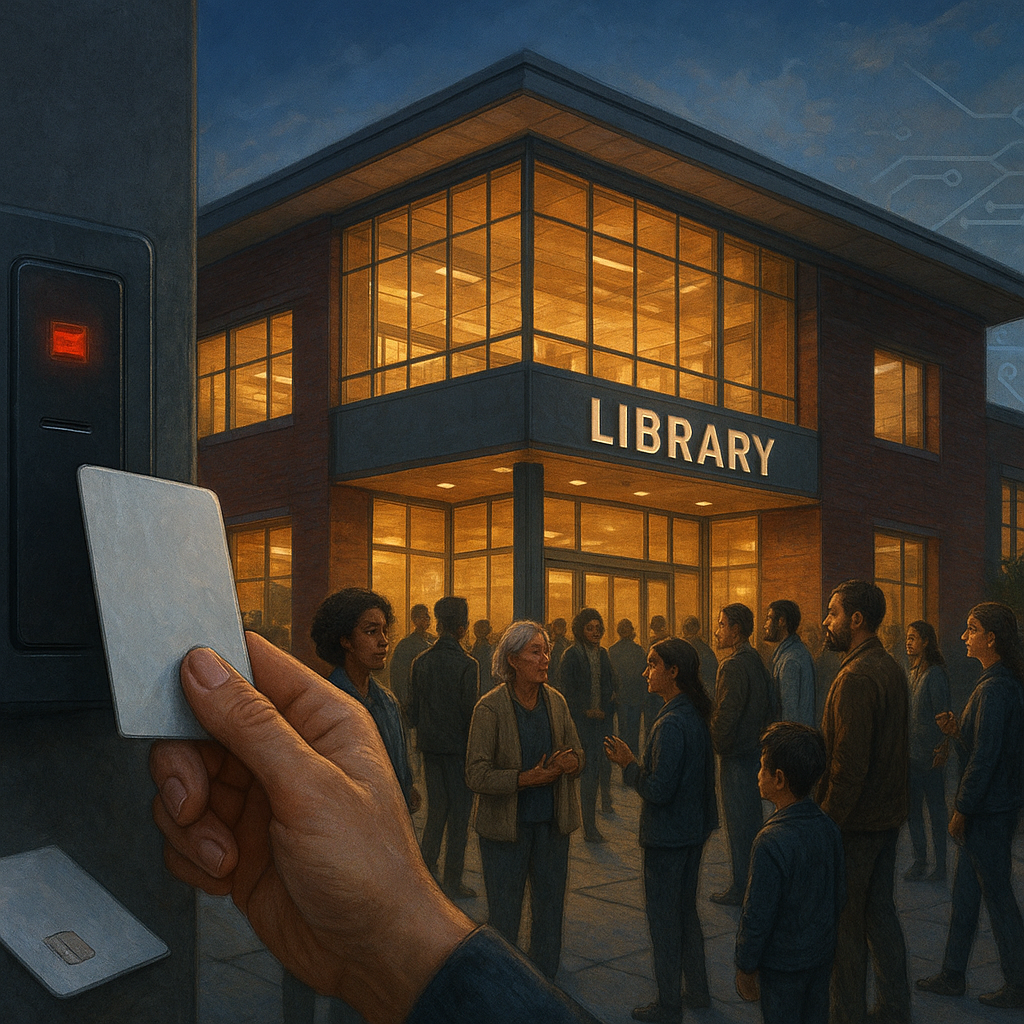
- Residents hear “restricted.” The public message often lands badly. People do not hear “efficiency.” They hear “you may not belong here.”
- Workers and patrons push back. Current and former employees, along with users, argue that the solution is to support the library, not turn it into a semi-private space.
- Politics enters the room. Local leaders start weighing public complaints, budget limits, and liability concerns. Suddenly the issue is not just about books. It is about who gets political cover.
- A broader debate begins. People begin asking whether the library is being protected or hollowed out.
I think that sequence tells you more than the official press releases do. Press releases tend to use soft language. “Pilot program.” “Flexible access.” “Modern user management.” Fine. But if the end result is a building that ordinary residents avoid because they do not want to badge in, then the program has failed its civic test.
What actually happened in these disputes, more often than not, is that a legitimate operational challenge got translated into a symbolic fight. That is why a former employee’s blunt comment carries weight. It cuts through the polished language. People can tolerate inconvenience. They do not tolerate being nudged out of a public institution that was supposed to be theirs.
If you want a useful comparison, look at how other public systems have handled access and security. Transit systems, schools, and courthouses all use entry controls, but each operates under different expectations. A library is not a courthouse. It should not feel like one. That distinction is not sentimental. It is practical.
Comparison table
| Feature | Open-access library model | Key card-access library model |
|---|
| Entry | Walk in during public hours | Swiped, coded, or authorized entry |
| Public perception | Welcoming, civic, ordinary | Restricted, managed, less open |
| Security | Relies more on staffing and visibility | Relies more on technology and controls |
| Equity | Easier for children, seniors, and unhoused patrons | Can exclude people without IDs or cards |
| Cost | Often higher labor cost | Often lower labor cost, but tech upkeep rises |
| Mission fit | Stronger match with public-service role | Weaker match unless narrowly used for specific needs |
| Biggest risk | Understaffing and disorder | Mission drift and public alienation |
The bigger competitor here is not another building. It is the controlled-access model itself. It competes against the older idea that a library is a shared civic room, not a screened facility. And if you ask me which model better matches a society that still claims to value human dignity, the answer is not subtle.
Common misconceptions and what to know
A lot of the commentary around library access is sloppy. People rush to slogans, and that helps nobody.
Misconception 1: Card access always improves safety. Not necessarily. It can reduce some kinds of misuse, but it does not solve staffing shortages, mental health crises, or poor building design. A card reader is not a guardian angel. It is hardware.
Misconception 2: Anyone who objects to restrictions is ignoring real problems. Wrong. Many critics understand the problems perfectly well. They simply think the response is disproportionate. That is a serious argument, not a tantrum.
Misconception 3: Libraries can become more secure without changing their public character. Sometimes they can. That depends on staffing, design, lighting, programming, and rules that are enforced fairly. If leaders skip those harder tasks, the public notices.
Misconception 4: This is just local drama. No. It is a small-scale version of a larger question facing public institutions everywhere: will they remain accessible to ordinary people, or will they slowly become managed spaces that filter out inconvenience along with risk?
The truth is, these fights are usually about scarcity. Scarcity of money, of staff, of patience, of political will. A library under stress can become a mirror of its city. If the city is fraying, the library feels it first.
I’ve seen civic leaders lean on technology because technology looks clean. It photographs well. It also creates the illusion of action. But the deeper issue is whether the institution is still serving the whole public, not just the users who fit neatly into the system.
That is where the moral case matters. Catholic social teaching would call this a question of the common good and the preferential care owed to those with the least access. You do not need to be theological to see the point. A public library should not quietly sort people into the worthy and the inconvenient.
For a related angle, see why public spaces still matter and how city councils shape library funding.
Frequently asked questions
What does a key card-access library mean? It means entry is controlled by a card, badge, code, or similar system rather than open public access during normal hours. The model is often used to limit misuse or reduce staffing demands.
Why are people upset about it? Because libraries are supposed to be public spaces. When access becomes restricted, residents worry the library is being turned into a managed facility instead of a shared civic institution.
Are there valid reasons for restricted access? Yes. Security incidents, vandalism, and staffing shortages are real issues. The problem is that restricted access can be a blunt response that creates new problems, especially for vulnerable users.
Can libraries stay open and still be secure? Yes, but it usually requires more staff, better design, clear rules, and consistent enforcement. Technology can help, but it does not replace human presence.
Final thought
The quote about a “key card-access library” works because it names the fear in plain speech. People know when a public promise is shrinking. They can feel it. And once they feel it, trust gets harder to rebuild.
The argument is not really about plastic cards or door readers. It is about whether a town still believes that some places should belong to everyone, especially the people with the fewest options. That is an old civic principle, older than modern city halls and older than most budget excuses. It is also a decent measure of whether leaders still understand stewardship.
Libraries do more than store books. They hold a community together in small, practical ways. They give children a place to sit, workers a place to search, and lonely people a place to breathe without being treated like a problem. If officials turn them into screened venues first and public rooms second, they may save money in the short run. But they will spend something harder to replace: public confidence.
And once that goes, good luck getting it back.
JSON-LD FAQPage schema
{
  "@context": "https://schema.org",
  "@type": "FAQPage",
  "mainEntity": [
    {
      "@type": "Question",
      "name": "What does a key card-access library mean?",
      "acceptedAnswer": {
        "@type": "Answer",
        "text": "It means entry is controlled by a card, badge, code, or similar system rather than open public access during normal hours."
      }
    },
    {
      "@type": "Question",
      "name": "Why are people upset about it?",
      "acceptedAnswer": {
        "@type": "Answer",
        "text": "Because libraries are supposed to be public spaces, and restricted entry can make residents feel the library is being turned into a managed facility instead of a shared civic institution."
      }
    },
    {
      "@type": "Question",
      "name": "Are there valid reasons for restricted access?",
      "acceptedAnswer": {
        "@type": "Answer",
        "text": "Yes. Security incidents, vandalism, and staffing shortages are real issues, but restricted access can create new problems for vulnerable users if used too broadly."
      }
    },
    {
      "@type": "Question",
      "name": "Can libraries stay open and still be secure?",
      "acceptedAnswer": {
        "@type": "Answer",
        "text": "Yes, but it usually requires more staff, better design, clear rules, and consistent enforcement. Technology can help, but it does not replace human presence."
      }
    }
  ]
}