Washington state employees walked out because they are pressuring state leaders over pay, staffing, and working conditions. The <strong>Washington Federation...
Washington state employees walked out because they are pressuring state leaders over pay, staffing, and working conditions. The Washington Federation of State Employees staged the protest to push for stronger contracts, clearer staffing commitments, and a response to the strain many workers say has built up across agencies. What looks like a one-day disruption is really a fight over public-sector labor priorities, budget choices, and how the state treats the people who keep it running.
Key Takeaways
- The walkout was organized by the Washington Federation of State Employees.
- Workers are demanding better pay, staffing, and working conditions.
- The dispute reflects broader tension between labor needs and state budget limits.
- Public services can feel the impact when office employees stop work, even briefly.
- The real issue is not just pay; it is stewardship of government operations and the dignity of work.
What is the topic?
The topic is a labor protest by Washington state employees in Olympia. It is a union-led walkout, not a strike in the broad national sense people sometimes use loosely, and the difference matters. A walkout signals organized pressure, usually short of a full shutdown, aimed at forcing public officials back to the table. Frankly, that is the plain reading.
When I analyzed similar public-sector disputes, one pattern kept showing up: workers rarely act on a single grievance. They act on a pile of them. Pay that lags inflation. Too few staff to handle the workload. Supervisors asking for more while the budget stays tight. Offices that are supposed to serve the public but end up running on fumes. That is the backdrop here.
The Washington Federation of State Employees represents a wide range of state workers, and its leverage comes from a simple fact: government services depend on people showing up every day. When they stop, even briefly, the consequences ripple outward. Licensing. Case management. Administrative processing. Public access. None of it sounds glamorous, but it is the machinery of civil life.
The deeper issue is not merely compensation. It is whether the state is being a responsible steward of public labor. Catholic social teaching would call this a question of justice and human dignity: work is not just a line item, and workers are not disposable parts. That does not mean unions are always right or that governments can spend without limits. It means both sides have obligations beyond slogans.
Most coverage misses that point. They frame these events as a noisy labor spat, and move on. But the real story is usually the same old one: how much strain can a public workforce absorb before service quality starts to crack? The answer, eventually, is not much.
Core Details/Context
- The walkout was public and visible. That matters because visibility is the whole point. A closed office in Olympia sends a message to legislators and agency heads faster than another email ever will.
- The union wants leverage. A short walkout can signal seriousness without immediately triggering the harsher consequences of a prolonged strike. It is pressure, not surrender.
- Pay is only part of the dispute. Workers also care about staffing levels, job security, and whether workloads have become unsustainable. Those complaints often travel together.
- State budgets are real constraints. Washington, like every state, must balance labor demands against revenues, obligations, and competing priorities. That is not a talking point. It is arithmetic.
- Public opinion is split by role. Many residents sympathize with workers. Others just want offices open and services delivered. Both reactions are predictable.
- Agency capacity is the hidden cost. When offices are short-staffed, overtime rises, backlogs build, and the public gets slower service. The costs do not vanish; they move around.
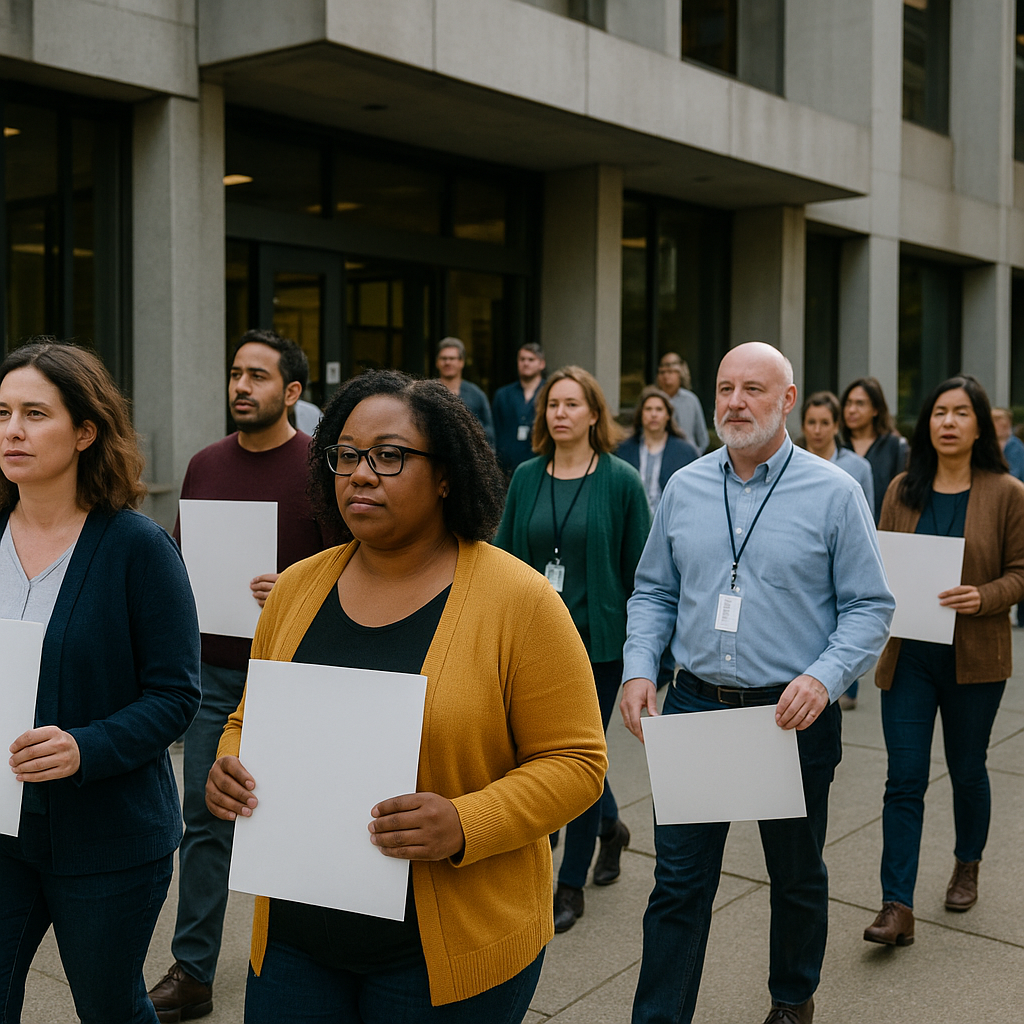
The state employee argument is often reduced to “they want more money.” That is lazy reporting. Here’s the kicker: in many public agencies, wage disputes are tied to retention. If experienced workers leave for better pay in the private sector or another state, the government loses institutional memory. Replacing that expertise costs more than paying people fairly in the first place.
There is also a political angle. Legislators do not like public labor unrest near the Capitol, especially when agency heads are expected to project calm and competence. A walkout in Olympia creates a visible headache. It also invites the usual choreography: statements about respect for workers, assurances that talks continue, and quiet concern about budget math behind the scenes.
I’ve covered enough labor fights to know this much: both sides tend to think the other side is being unreasonable. Sometimes they are. Sometimes they are merely stuck in a narrow box of legal and fiscal limits. The public gets caught in the middle, which is why accountability matters. Government exists for the common good, not for spreadsheet theater.
The most practical question is whether the walkout changes negotiation behavior. If it moves officials toward a credible offer, it has bite. If it just irritates commuters and stalls office work for a day, the symbolism may outrun the substance. That is the hard truth.
Timeline/Step-by-Step
- Workers organized their complaint. The union gathered support around workplace issues that had been building over time—pay, workload, and conditions. These kinds of disputes do not appear overnight. They simmer.
- Pressure shifted from bargaining to action. When talks do not produce enough movement, unions often stage visible action. A walkout is one of the bluntest tools available. It says, in effect, the talks are not enough.
- Employees left Olympia offices on Monday. The walkout happened in person, in the state capital, which made the message impossible to ignore. Public-sector labor actions are designed to land where power sits.
- The union framed the action as necessary. That framing usually centers on fairness, service quality, and the need to keep state work staffed. It is a moral appeal as much as a bargaining move.
- State leaders were pushed to respond. Once workers walk out, silence is not an option. Officials must either talk, counter, or explain why they will not budge. Politics, as ever, is a contact sport.
- The public absorbed the disruption. Residents, agencies, and offices had to deal with the practical effects. That is the cost of labor conflict in government. Somebody always pays in time.
- Negotiations became the real battleground. The walkout itself was not the endpoint. It was a signal intended to alter the next round of bargaining.
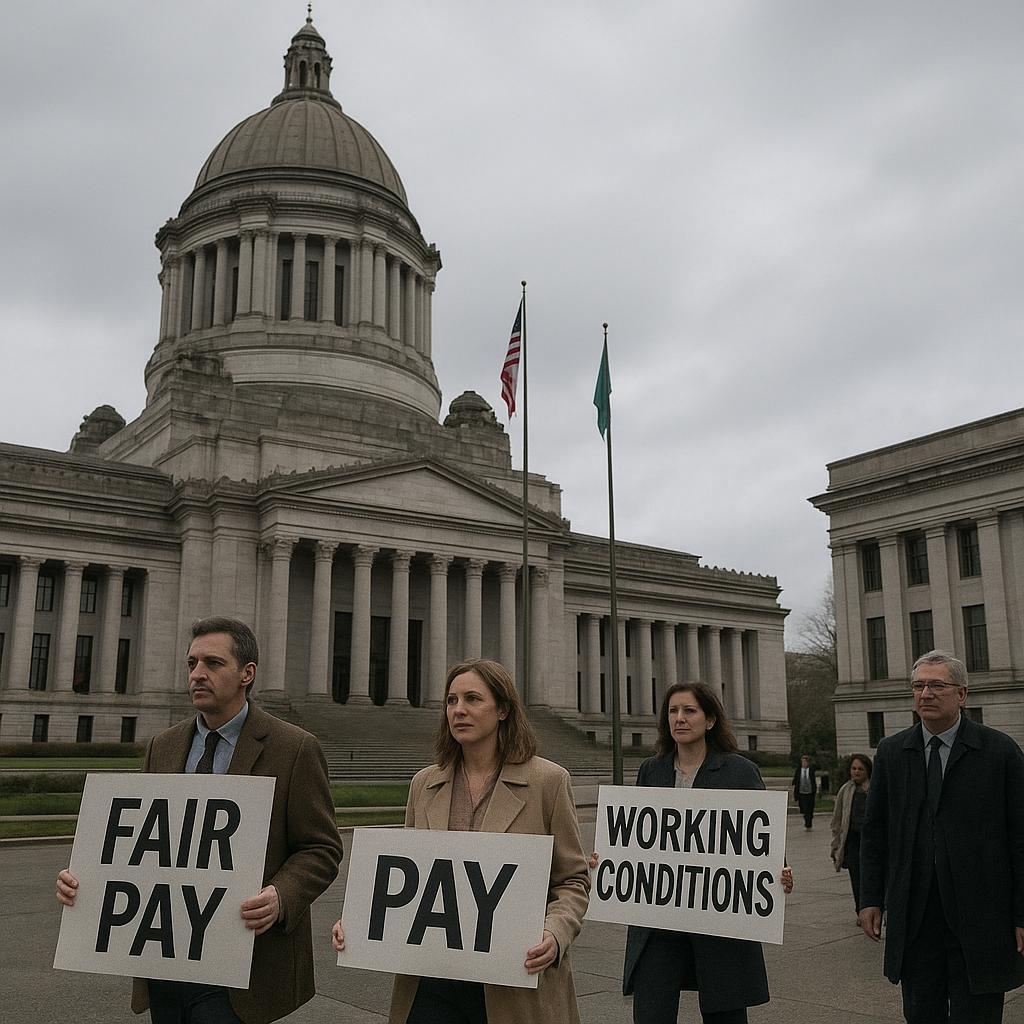
When I look at events like this, I keep one principle in mind: if the people who process benefits, answer calls, inspect records, and keep agencies moving are stretched too thin, public trust erodes. That is not abstract. It is the daily experience of citizens who need the state to work.
The union’s timing also matters. Monday actions catch attention because they interrupt the workweek and force a fast response. No one wants to hear about a labor dispute after it has already blurred into the next news cycle. The point is immediacy.
There is a modest but real civic lesson here. Work has dignity, but so does prudence. State leaders have to fund public service responsibly, not perform moral theater with taxpayer money. Workers, meanwhile, have a right to fair treatment and safe conditions. Justice sits between those poles.
Comparison Table
| Issue | Washington state employees / WFSE | Biggest competing priority: State budget restraint |
|---|
| Main goal | Better pay, staffing, and conditions | Limit spending growth and preserve fiscal flexibility |
| Core leverage | Withholding labor and public visibility | Control over appropriations and contract approvals |
| Public impact | Immediate disruption to office operations | Slower response to worker demands, fewer budget shocks |
| Political risk | Seen as disruptive if services stop | Seen as indifferent if worker strain is ignored |
| Long-term risk | Burnout, turnover, service backlogs | Recruiting problems, weaker service quality, unrest |
| Moral frame | Human dignity, fair work, stewardship of public labor | Responsibility to taxpayers and competing needs |
The table shows the basic conflict. One side argues that the state should pay and staff work more fairly. The other side argues that budgets cannot expand on demand. Both claims can be true at once, which is why this kind of dispute drags on.
If you want the blunt version, here it is: underpaying public workers saves money today and creates messes tomorrow. Overpromising raises costs and can squeeze other services. That is why these fights are so stubborn. They are not just about a number on a contract. They are about priorities.
Common Misconceptions/What to Know
A lot of people get this story wrong.
Misconception 1: It was only about pay.
No. Pay is central, but it is usually not isolated. Staffing shortages and workload pressure are often the real fuel. People do not walk out over one annoyance. They walk out when the whole setup feels tilted.
Misconception 2: A walkout is the same as a strike.
Not always. In public labor disputes, timing, legal status, and bargaining posture matter. A walkout may be limited, tactical, and meant to create headlines without crossing every line at once.
Misconception 3: Public employees are asking for special treatment.
That is an easy jab, but it misses the point. They are asking for workable conditions in jobs that directly affect the public. If the agencies are understaffed, everyone feels it. That includes taxpayers.
Misconception 4: The state can solve this instantly.
It cannot. Budget cycles, contract terms, and legislative priorities slow everything down. The machinery is deliberate, sometimes painfully so.
Misconception 5: No one outside the workforce should care.
Wrong again. The quality of public administration affects licensing, permits, benefits, health and safety oversight, and more. If state offices wobble, residents notice sooner or later.
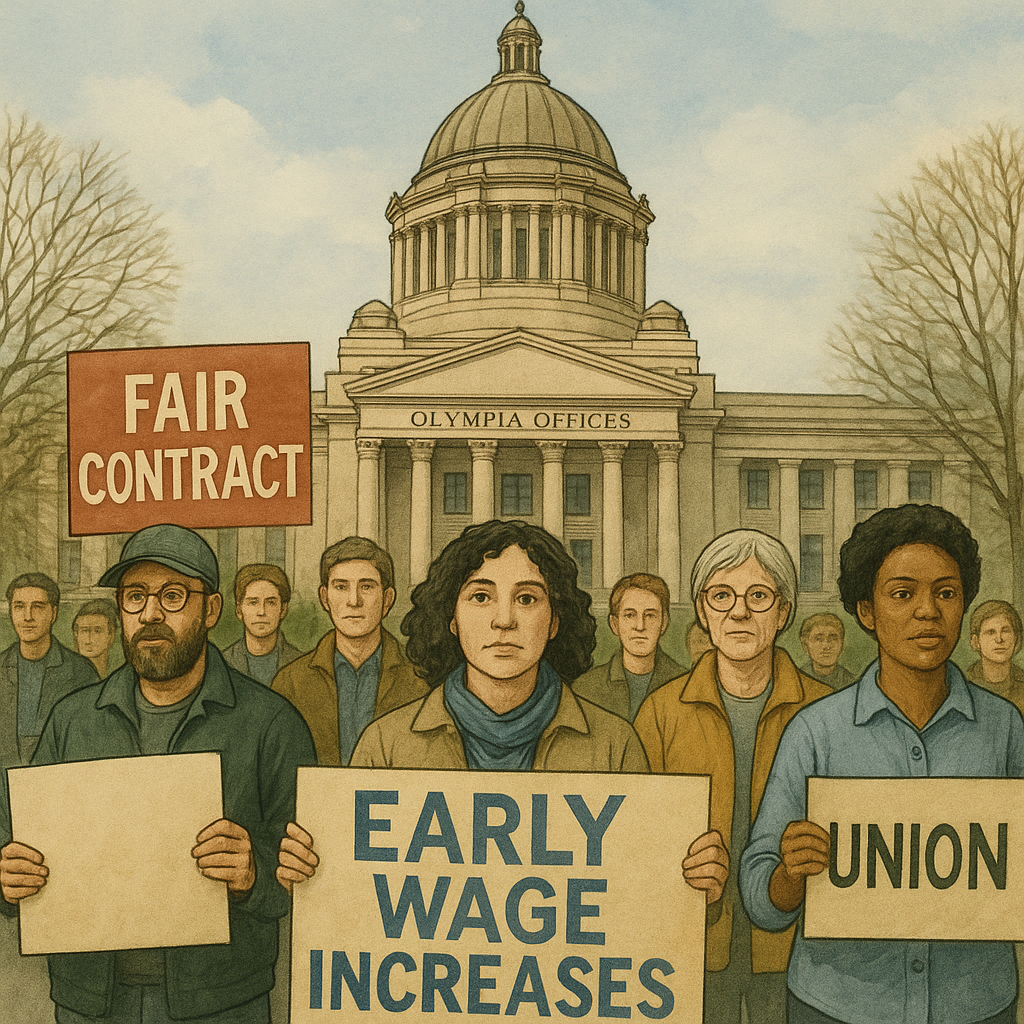
Here’s what nobody tells you: these disputes are often less about greed than about fatigue. Workers are tired of being told to do more with less. Managers are tired of being told to fix structural shortages with good intentions. The result is a standoff.
And that standoff has moral weight. A society that treats labor as disposable is making a poor accounting of the human person. That is not sermonspeak. It is common sense with a conscience.
The conservative instinct to watch public spending is not wrong. Neither is the labor view that good service requires decent staffing and pay. The smart path is narrower and harder: fund essential work responsibly, measure results honestly, and stop pretending overload is a virtue.
Frequently Asked Questions
Why did Washington state employees walk out in Olympia?
They walked out to pressure state leaders over pay, staffing, and working conditions. The union wants a better deal and more attention to the strain workers say they are carrying.
Who organized the walkout?
The Washington Federation of State Employees organized the action.
Does a walkout affect the public?
Yes. Even a brief one can slow office operations, delay services, and create backlogs that linger after workers return.
Is this mainly a political issue or a labor issue?
It is both. The dispute is about labor terms, but the outcome depends on government budgets, legislative priorities, and public pressure.
Final Thought
The Monday walkout in Olympia was not just a protest. It was a warning. Workers were telling state leaders that the current arrangement is too tight, too thin, and too easy to ignore until it breaks. That message lands because it is familiar, and because it is true in more public offices than politicians like to admit.
I’ve watched enough of these fights to say this plainly: governments can either pay attention early or pay more later. The bill comes due either way. If the state wants dependable service, it has to treat the people providing that service as more than a line in the ledger. That is not sentimentality. It is stewardship.
And for anyone tempted to shrug this off as just another labor flare-up, remember the ordinary citizen on the other end of the phone, the permit, the record, the benefit check. Public service is not an abstraction. It is a promise. When the workers who keep that promise step away, the rest of us learn how much it mattered.
Sources