Woodinville House Fire: One Person Dies After Kitchen Blaze Engulfs Home
A person died after a kitchen fire spread through a home on Little Bear Creek Road near Woodinville early Monday. One occupant escaped through a bedroom window after calling 911 and following dispatchers’ instructions; firefighters found a second person inside but medics could not save them. The Snohomish County Fire Marshal’s Office is investigating the cause.
The reported account gives a stark sequence: a fire described as beginning in the kitchen spread quickly, a resident called for help from a bedroom, and firefighters arrived to find the home fully engulfed. Those details establish the scale of the emergency, but they do not answer every question. The calendar date, exact address, identities and ages of the people involved, extent of property damage, and presence of smoke alarms or sprinklers have not been reported in the information available here.
That distinction matters. A reported kitchen fire is not the same thing as a confirmed cause, and investigators have not said whether an appliance, cooking activity, electrical fault, or anything else ignited the blaze. When I separate confirmed details from assumptions, the central point is plain: the fire became life-threatening before crews reached the home, and one person did not survive. More specific claims would get ahead of the facts.
What Is the Woodinville House Fire?
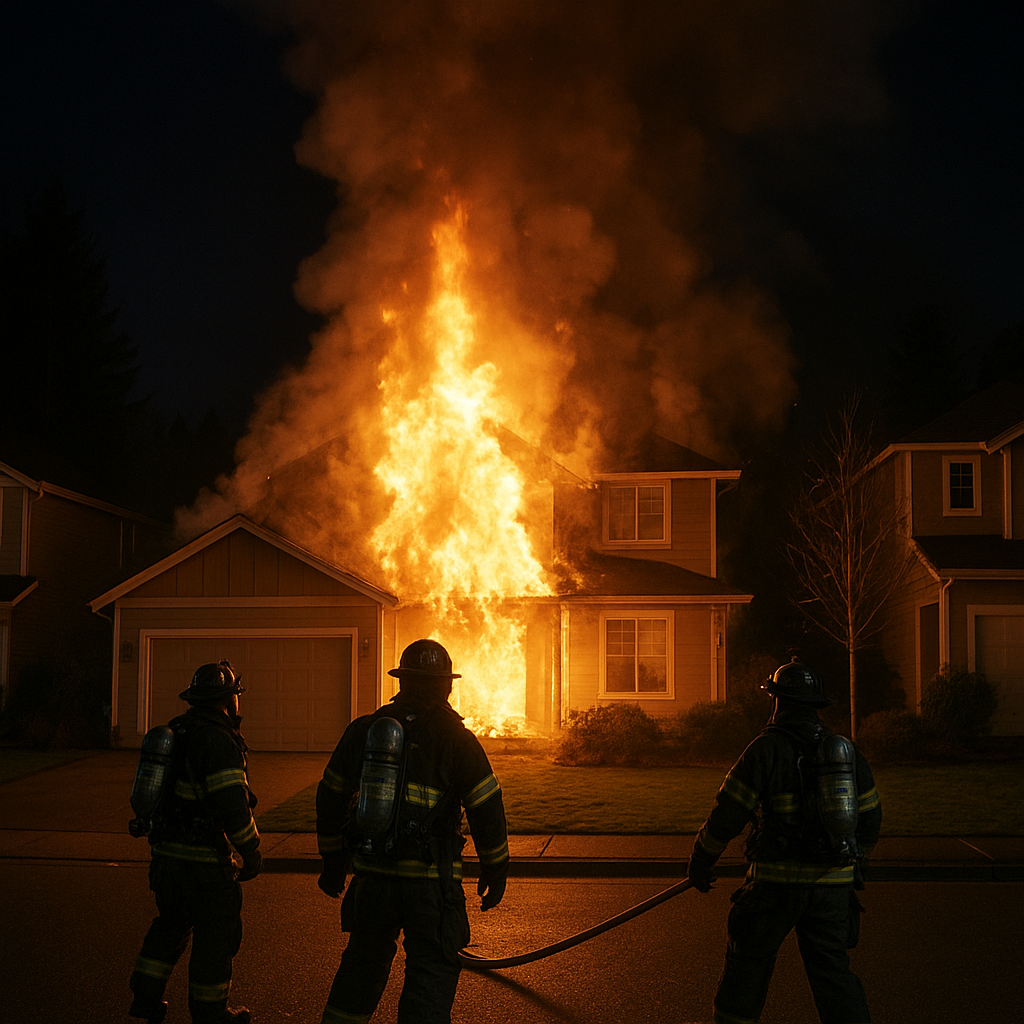
The Woodinville house fire is a fatal residential fire reported by Snohomish Regional Fire & Rescue. At 2:10 a.m. early Monday, firefighters were dispatched to a single-family home along Little Bear Creek Road after receiving reports of a kitchen fire. The homeowners woke to flames spreading rapidly through the kitchen, according to the account. One occupant called 911 from a bedroom and got out through a window after following instructions from emergency dispatchers.
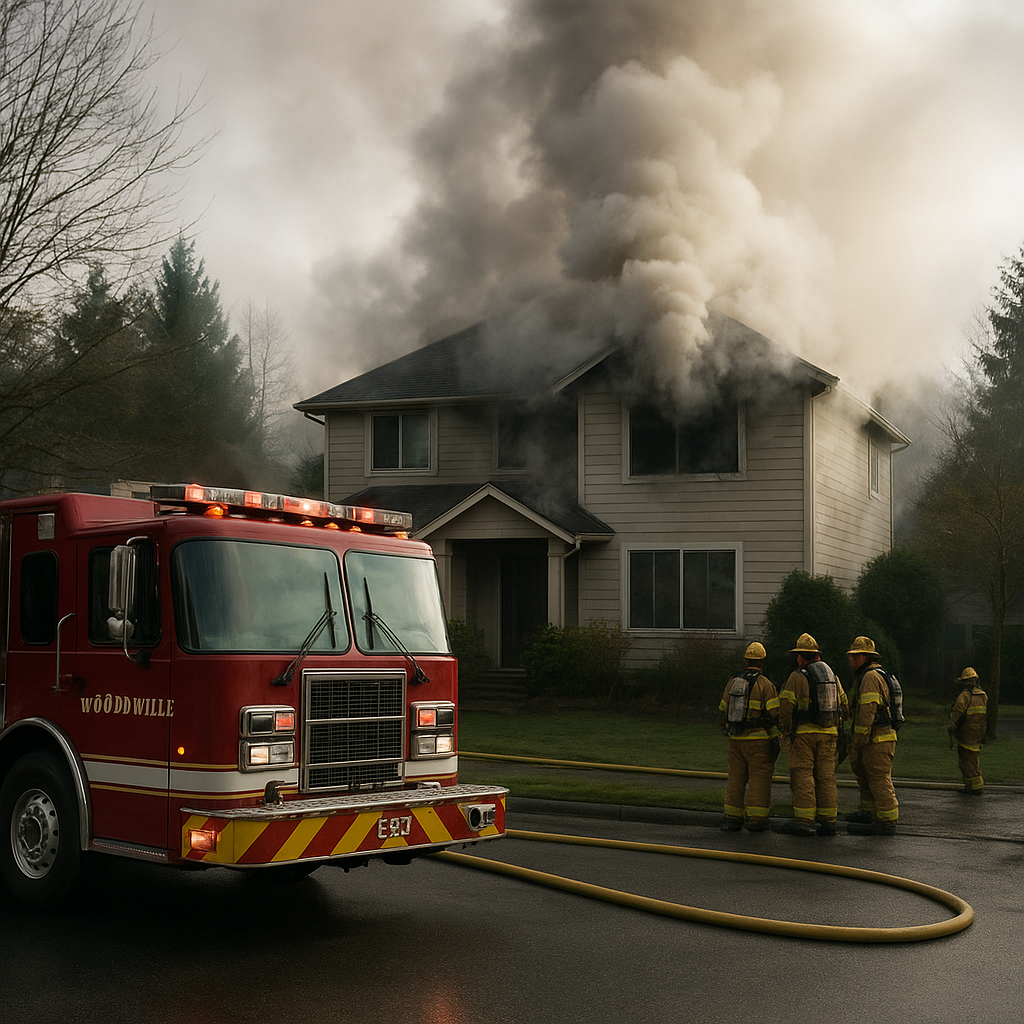
While crews were on the way, dispatchers learned that another person remained inside. Firefighters arrived to find the home fully engulfed, began fighting the flames, and searched for the missing occupant. They found that person inside and brought them outside. Medics were unable to save the individual. Fire officials also said crews kept the flames from spreading to neighboring homes. The Snohomish County Fire Marshal’s Office is investigating what started the fire.
Those are the reported facts. The account does not say how long the fire had been burning before the 911 call, how quickly flames reached other parts of the home, or how long the fire took to control. It does not identify a specific room where the second person was found beyond saying they were inside. Nor does it say whether anyone else was in the home. The safest reading is to stick to the details officials have given, not fill the gaps with a tidy but unsupported story.
The words kitchen fire identify where the emergency was first reported; they do not settle the fire’s origin or cause. Fire investigators commonly need to examine a scene before drawing conclusions, and the public account says that work is under way. Until the fire marshal’s office releases findings, the cause remains unknown. Frankly, that is a less dramatic answer than a guess, but it is the accurate one.
The response also involved two urgent tasks at once: suppressing a fire that had engulfed a home and searching for a person reported trapped inside. Officials said firefighters did both while preventing spread to nearby houses. That protection matters beyond the property where the fire began. Limiting spread reduces danger to neighbors and gives responding crews fewer fires to manage, a practical expression of the common good and shared responsibility for people’s safety.
For agency information, see Snohomish Regional Fire & Rescue. The available account does not identify a specific department statement URL, so this link is to the agency’s public site rather than a claimed incident release.
Core Details and Context
The known facts are brief, but they carry important distinctions. Officials say dispatchers received a report of a kitchen fire and sent crews at 2:10 a.m. The homeowners woke to flames spreading rapidly through the kitchen. One occupant made a 911 call from a bedroom, escaped through a window after receiving dispatcher instructions, and another person was reported trapped. Firefighters arrived to find the home fully engulfed. They searched, located the trapped person, and brought them outside; medics could not save that person. Crews stopped the flames from spreading to neighboring homes.
A few points deserve careful wording:
- The reported location is near Woodinville, along Little Bear Creek Road. The provided information does not give a street number or further description of the property.
- The fire was reported as a kitchen fire. The official cause has not been released, and the fire marshal’s investigation remains open.
- One occupant escaped through a window. The account says this happened after the occupant called 911 and followed dispatchers’ instructions. It does not establish that a window would be the right escape route in another home or another fire.
- A second person was found inside. Officials say the person was brought outside, but medics were unable to save them. Their identity and age have not been reported.
- Nearby homes were protected from the flames. This does not mean there was no smoke, heat, or other effect beyond the burned home; those details have not been reported.
The difference between the dispatch report and the investigation’s eventual finding is more than wordplay. People often hear kitchen fire and assume a familiar sequence involving a stove or unattended pan. But that account does not identify what ignited, whether cooking was taking place, or how the flames spread. Investigators will need to establish what evidence supports any cause determination. Until then, explanations built around an appliance or a resident’s actions are speculation.
The hour is also part of the context, not a complete explanation. The call came at 2:10 a.m., when residents may be asleep, but the available information does not say whether the occupants were sleeping when the fire began, how long it went unnoticed, or whether an alarm sounded. We should not turn a plausible risk factor into a fact about this home. General safety advice can still be useful, provided it is presented as advice for households broadly rather than a diagnosis of this incident.
The U.S. Fire Administration’s cooking-fire guidance and the National Fire Protection Association’s cooking safety information offer practical prevention steps for the public. Neither replaces the fire marshal’s work in this case. Safety guidance explains how to reduce common risks; an investigation seeks evidence about a particular fire. Conflating the two helps no one.
Timeline: What Happened
- The fire is reported. Early Monday, dispatchers received reports of a kitchen fire at a single-family home on Little Bear Creek Road near Woodinville. Snohomish Regional Fire & Rescue says crews were dispatched at 2:10 a.m. The available account does not give the exact time the fire started or how long it burned before the call.
- An occupant reaches 911. As flames spread rapidly through the kitchen, one occupant called from a bedroom. The caller escaped through a window after following instructions from emergency dispatchers. The report does not say whether the caller was injured, whether other exit routes were blocked, or how the dispatcher assessed the situation. Those details should not be guessed at.
- Dispatchers learn someone remains inside. While firefighters were responding, dispatchers received information that a second person was still trapped in the home. That update changed the urgency of the response: crews had to address the fire and search for the person reported missing. The account does not provide the precise time dispatchers learned this or how the information was relayed to crews.
- Firefighters arrive to a fully engulfed home. On arrival, crews found the home engulfed in flames. They immediately began fighting the fire while searching for the missing person. Officials have not reported the size of the response, the number of apparatus, or how long the search and suppression operations lasted. My reading of the stated timeline is that the rescue search was conducted amid a serious, active fire—not that every operational detail is publicly known.
- The person is brought outside. Firefighters found the trapped person inside and brought them out. Medics could not save them. The information available does not identify the person or describe the medical care provided, and there is no basis to add detail beyond what officials reported.
- The fire is kept from neighboring homes, and an investigation begins. Firefighters prevented the flames from spreading to adjacent homes. The Snohomish County Fire Marshal’s Office is investigating the origin and cause. No finding has been reported, so the cause remains undetermined in the public account.
The timeline has a gap that matters: the time between the first flames, the 911 call, and firefighters’ arrival is not specified. There is also no reported time when the fire was declared under control. Those omissions do not undermine the basic sequence; they mark the boundary of what has been shared. A careful account should keep that boundary visible instead of supplying made-up precision.
Emergency calls can involve changing information. A caller may be able to provide an address, describe visible danger, and answer questions, but a fast-moving fire can limit what is safe or possible. The resident’s reported escape followed dispatcher instructions; it should not be recast as a universal instruction to climb out of a window. In another situation, a dispatcher may give different directions based on the caller’s location and conditions. Call 911 and follow the instructions provided for the actual emergency.
Comparison: This Incident and General Kitchen-Fire Guidance
There is no competing incident or company to compare with this tragedy. A useful comparison is between the specific facts officials have reported and general household fire guidance. The left column describes this event; the right column describes broadly applicable safety principles from public agencies. They answer different questions, and mixing them up is a common source of bad reporting.
| Topic | Woodinville fire: reported facts | General household guidance |
|---|
| Initial report | Dispatchers received a report of a kitchen fire at a single-family home. | Stay in the kitchen while cooking when it is safe to do so, and keep combustible items away from heat. See the USFA and NFPA cooking guidance. |
| Emergency call | One occupant called 911 from a bedroom and followed dispatchers’ instructions. | Call 911 when a fire is spreading or cannot be handled safely; follow the dispatcher’s directions for your circumstances. |
| Escape | The occupant got out through a window. The account does not explain what other routes were available. | Plan more than one way out where possible, and leave rather than trying to fight a spreading fire. The right action depends on the conditions and emergency instructions. |
| Person inside | Dispatchers learned that a second person was trapped; firefighters found and removed the person, but medics could not save them. | Tell emergency dispatchers if someone may still be inside. Do not re-enter a burning building; firefighters have protective equipment and training. |
| Spread | Fire crews prevented flames from reaching neighboring homes. | Smoke alarms, an escape plan, and early warning can help households respond, but the existence or performance of any such equipment in this home has not been reported. |
| Cause | The Snohomish County Fire Marshal’s Office is investigating. | Do not assume a cause from the room where a fire was first reported. Wait for the investigation’s findings. |
The comparison is not a scorecard. It cannot tell us whether this fire could have been prevented, whether an alarm was present, or whether a different decision would have changed the outcome. Those judgments require evidence the account does not contain. What it can do is separate incident reporting from useful general practice: officials have described a fast-spreading fire and a fatal rescue; safety agencies explain precautions residents can take in their own homes.
The American Red Cross home-fire guidance recommends planning escape routes and practicing them. Ready.gov’s home-fire information also covers preparation and response. These resources are relevant to readers considering household readiness, not evidence about the cause or circumstances of the Little Bear Creek Road fire.
Common Misconceptions and What to Know
A kitchen fire report does not prove that cooking caused the fire. It tells readers how the incident was initially described, not what an investigator has established. The fire marshal’s office is still investigating. A stove, appliance, wiring, or another source should not be named as the cause without a finding from officials. This is where headline certainty often outruns the evidence.
A fast spread does not reveal how the fire started. Officials say the homeowners woke to flames spreading rapidly through the kitchen and that firefighters found the house fully engulfed. Those observations tell us the fire was serious by the time it was reported and crews arrived. They do not establish how many minutes passed, what materials burned, or whether a particular building feature contributed. The account gives no technical assessment of the structure.
A window escape is not a universal rule. One occupant escaped through a bedroom window after calling 911 and following dispatcher instructions. That is what happened in this account. It does not mean people should always use a window, nor that anyone should delay leaving to call from a particular room. Escape choices depend on the conditions in the home; emergency dispatchers can provide directions. If a fire is spreading, the priority is getting out safely and calling emergency services from a safe place when possible.
The fact that firefighters saved neighboring homes does not mean the event was contained to one room. The home was described as fully engulfed when crews arrived. Firefighters prevented flames from spreading to nearby homes, a significant part of the response. The account does not say whether neighbors experienced smoke or other impacts, and it does not describe the condition of the home afterward. No more should be inferred.
The absence of alarm information is not proof there was no alarm. The report does not state whether smoke alarms or residential sprinklers were installed, whether they operated, or whether any building safety system was involved. Those details may or may not emerge later. In the meantime, households can check smoke alarms, keep exit routes clear, and make an escape plan without suggesting that an alarm failure contributed here.
An investigation is not the same as a published finding. Investigators may examine the fire scene and consider evidence before determining origin and cause. The public has not been given a conclusion in the reported account. “Under investigation” is the responsible description; an imagined explanation is not an update. Most coverage misses the real discipline required here: say what is known, identify what is not, and wait for evidence before assigning blame.
For general prevention, the NFPA and USFA resources linked above offer advice on cooking safety. Their guidance includes staying attentive around cooking heat and responding appropriately if a fire grows. Never put water on a grease fire. If a small pan fire can be handled without risk, official guidance commonly advises turning off the heat when safe and covering the pan with a lid; if the fire is spreading or you are unsure, leave and call 911. A household should not delay evacuation to test its ability to fight a fire. That advice is general, not a conclusion about this case.
There is a human point beneath the technical details. A death in a home is not merely a line in a dispatch log, and a survivor’s actions should not be judged from a few sentences released after the event. Fire crews also faced the difficult work of searching while suppressing flames and protecting nearby properties. Treating each person with dignity, and treating safety information as a public responsibility, is the least we owe the people affected.
Frequently Asked Questions
Where did the fatal Woodinville fire happen?
Snohomish Regional Fire & Rescue reported that crews were dispatched to a single-family home along Little Bear Creek Road near Woodinville. The account does not provide a street number or a more precise address.
What caused the fire?
The cause has not been reported. The Snohomish County Fire Marshal’s Office is investigating what started the fire. Although the initial report described a kitchen fire, officials have not announced a confirmed ignition source.
How many people were involved, and what happened to them?
The account describes one occupant calling 911 from a bedroom and escaping through a window after following dispatcher instructions. Dispatchers also learned that a second person remained inside. Firefighters found that person and brought them outside, but medics were unable to save them. The available information does not identify either person or state whether anyone else was in the home.
Did the fire spread to nearby homes?
Fire officials said firefighters prevented the flames from spreading to neighboring homes. The account does not say whether nearby properties experienced smoke or other effects, and it does not provide details about the damage to the home where the fire began.
Final Thought
The most responsible account of this fire is also the simplest: an early-morning kitchen fire spread through a home near Woodinville, one occupant escaped after speaking with 911 dispatchers, another person died, and firefighters kept the flames from reaching neighboring homes. The county fire marshal is investigating. The cause remains unknown in the information reported so far.
That is not a thin story. It is a story with clear human stakes and a clear limit on what can yet be said. A family has suffered a death; a survivor escaped a dangerous fire; firefighters worked under severe conditions; and nearby residents were spared a wider blaze. Each fact matters without requiring an invented explanation to make the event feel complete.
The next useful public update will be one that answers specific questions: what investigators determine about the fire’s origin and cause, and whether officials release additional confirmed details about the response. Until then, speculation about cooking practices, alarms, building materials, or personal choices risks placing blame where no evidence has been presented. I would rather leave a question open than turn uncertainty into a confident falsehood.
For readers, the practical response is to review their own household plans. Test smoke alarms according to their instructions, make sure people know more than one way out where possible, and talk through what to do if a fire blocks a route. Keep emergency numbers accessible and follow directions from dispatchers during an actual incident. Those steps cannot guarantee an outcome, and they should not be used to judge the people in this case. They are ordinary acts of stewardship—small preparations that recognize the safety and dignity of everyone who shares a home and a community.