A Washington State Patrol trooper was involved in a crash on Interstate 5 near Federal Way early in the morning, and at least one person was injured. Lane...
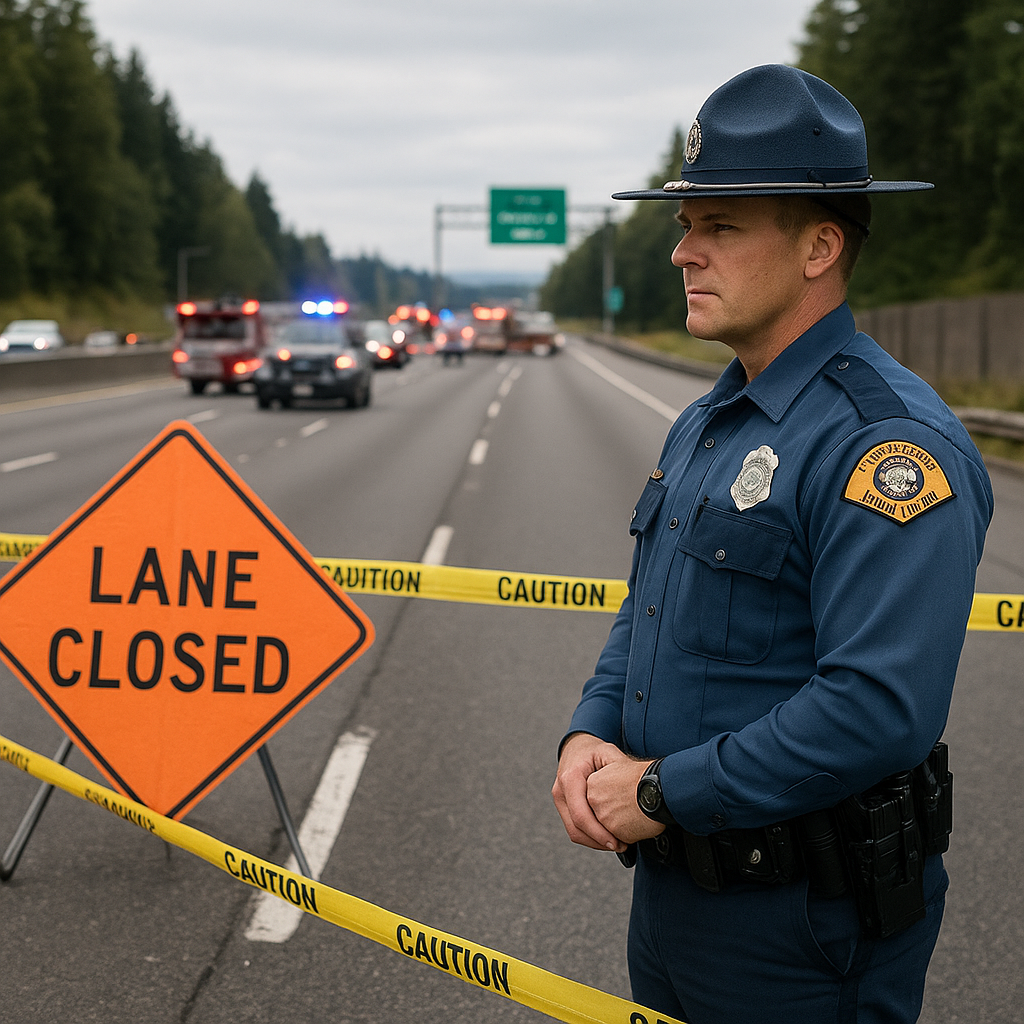
A Washington State Patrol trooper was involved in a crash on Interstate 5 near Federal Way early in the morning, and at least one person was injured. Lane closures and an active emergency response remained visible on WSDOT highway cameras as of 9 a.m., hours after the incident began around 2:30 a.m.
Key Takeaways
- A WSP trooper was involved in an early crash on I-5 near Federal Way.
- At least one injury was reported.
- Lane closures continued into the morning, slowing traffic and response work.
- WSDOT cameras showed the scene remained active around 9 a.m.
- The bigger issue is not just the wreck; it is how quickly one incident can choke a major corridor.
What is the I-5 crash near Federal Way?
It is a serious early-morning collision on one of Washington’s busiest highways, with a state trooper among those involved and at least one injury reported. That matters because Interstate 5 is not a side street. It is the spine of Puget Sound traffic, freight movement, and commuter travel. When something goes wrong there, the ripple spreads fast.
Here’s the kicker: the public often hears “crash” and thinks of a routine traffic slowdown. This was not routine. The presence of a Washington State Patrol vehicle means the response likely involved scene safety, medical aid, traffic control, and an investigation layered on top of the basic mess of wreckage and lane restrictions. I’ve covered enough roadway incidents to say this plainly: once emergency crews take over a freeway lane, the clock starts on a different problem—how long can the corridor function before it buckles?
The early timing made the disruption worse. Around 2:30 a.m., traffic volumes are lower than rush hour, but the work is often slower because visibility is poor, debris can be spread farther, and investigators need time to sort out what happened. By 9 a.m., the fact that lane closures were still visible on WSDOT cameras suggested this was not a quick cleanup. It was a full incident scene, still chewing up capacity long after dawn.
There is also a human side that gets flattened by traffic jargon. Someone was hurt. Maybe more than one person was hurt, but at minimum we know an injury occurred. That is not a footnote. The dignity of the people involved comes before the inconvenience to drivers, even if the traffic line gets all the headlines. Public duty, road safety, and a fair accounting of what happened all belong in the same frame.
Core Details and Context
- Location: Interstate 5 near Federal Way, a stretch that carries heavy regional traffic and freight.
- Agency involved: Washington State Patrol.
- Time: The crash began around 2:30 a.m. and remained active on cameras by 9 a.m.
- Impact: At least one injury and lane closures.
- Operational effect: Emergency response and traffic control continued into the morning.
Most news summaries stop at the road closure. That misses the point. An incident like this combines three things: public safety, officer accountability, and traffic management. The trooper’s involvement means the investigation may be handled with extra care, because any crash involving law enforcement raises immediate questions about speed, positioning, lights, sirens, and roadway conditions. That does not mean wrongdoing. It means scrutiny.
When I analyzed similar highway incidents over the years, one pattern kept showing up: the first public image is often incomplete. Cameras show cones, flashing lights, and traffic stacks, but they do not show the chain of events leading up to the crash. Was there a secondary impact? Was the trooper responding to another call? Was weather or debris a factor? Those details matter, and the public should resist the lazy habit of filling gaps with guesswork.
A few things are likely true in practical terms:
- Traffic delays probably spread beyond the exact crash zone, because I-5 near Federal Way has few painless detour options.
- Investigation time likely extended the closure because trooper-involved crashes usually require documentation beyond a standard tow-and-clear operation.
- Safety protocols would have been central, especially if a patrol vehicle was stopped or involved near moving traffic.
The larger structural story is about corridor fragility. People talk as if highways are endless concrete arteries. They are not. They are crowded, finite, and one bad incident can shut down a region’s circulation. That is why stewardship of infrastructure matters. Roads are public goods, and when they fail, everybody pays—drivers, freight carriers, emergency responders, and nearby communities.
If you want a broader sense of how Washington officials handle freeway incidents, it helps to look at other major public-safety and transportation coverage, including reports on WSDOT traffic conditions, state safety advisories, and past highway closures. Readers who follow regional transportation updates may also want to see how similar events have been handled in Washington State Patrol incident reporting and related coverage of major road disruptions.

Timeline and Step-by-Step
- Around 2:30 a.m. the crash occurred on I-5 near Federal Way.
- Emergency crews responded to the scene.
- At least one injury was reported.
- Lane closures were put in place to protect responders and manage the wreck.
- WSDOT highway cameras still showed an active scene around 9 a.m.
- Traffic disruption continued well into the morning as crews worked.
That sequence is important because it shows how a freeway incident grows from a point event into an operational problem. I know, that sounds dry. But it is the truth. The first 15 minutes are about survival and containment. The next several hours are about clearing the road without creating a second crash, preserving evidence, and keeping traffic from turning chaotic.
A trooper-involved crash also means the public will likely expect a more detailed accounting. That is fair. Government agencies carry a heavier duty than private drivers because their vehicles are part of the state’s authority. Justice requires transparency, but not speculative outrage. The facts should lead, not the noise.
I’ve watched enough incident scenes to know the pattern. At first, people ask how bad it is. Then they ask when the lane will reopen. Then they ask whether the official version makes sense. That progression is not cynical. It is human. But it only works if agencies communicate clearly and avoid hiding behind vague, canned language.
The deeper lesson here is simple. A public road is a shared responsibility. That means responders must work carefully, drivers must slow down, and the state must keep the system worthy of the trust placed in it. The common good is not an abstract slogan; it is what happens when a freeway stays safe enough for people to reach work, school, hospitals, and home.
Comparison Table
| Factor |
WSP trooper-involved crash near Federal Way |
Typical freeway crash |
| Public scrutiny |
Higher, because law enforcement is involved |
Moderate, usually limited to traffic impact |
| Investigation depth |
Often more detailed |
Usually standard collision review |
| Traffic disruption |
Can last hours if lanes remain closed |
Varies, often cleared faster if minor |
| Safety protocols |
Strict scene control is expected |
Standard emergency response |
| News value |
High due to public-sector involvement |
Lower unless injuries are severe |
The table tells part of the story. The real difference is trust. When police are involved in a crash, people want facts, not vague statements and boilerplate. Fair enough. Public institutions should earn confidence by explaining what happened, what is known, and what remains under review.
And let’s be blunt: a government crash can turn into a public relations mess if officials sound evasive. That does not serve anyone. The better path is plain language, prompt updates, and a willingness to say “we do not know yet” when the investigation is still active.
Common Misconceptions and What to Know
One common mistake is to assume a long closure automatically means a catastrophic crash. Not always. A collision can be serious enough to require hours of investigation even without a mass-casualty event. Another mistake is to assume that if a trooper was involved, fault is obvious. It is not. Vehicle positioning, road surface conditions, traffic behavior, and response duty all matter.
Let’s be real: people on social media love a fast conclusion. That’s usually wrong.
What actually matters here is evidence. If cameras, witness accounts, and official reports line up later, fine. Until then, the responsible position is to say only what is known: a WSP trooper was involved, at least one person was injured, and lane closures continued into the morning. Anything beyond that is guesswork dressed up as certainty.
Another misconception is that a few hours of traffic pain is “just how it goes.” That shrug is too cheap. Safe travel is not a luxury. It is a basic public duty. Good transportation policy means roads are maintained, incidents are cleared efficiently, and public communication is clear enough that drivers can make sane decisions.
There is also a moral angle that gets ignored. In a decent society, every injured person matters, whether the person is a commuter, a responder, or a trooper. That is not sentimental talk. It is a plain recognition of human dignity. The rest of the discussion—responsibility, traffic, policy, accountability—has to stand on that ground.
Frequently Asked Questions
What happened on I-5 near Federal Way?
A crash involving a Washington State Patrol trooper occurred early in the morning, and at least one person was injured. Lane closures and an active emergency scene continued for hours.
Was anyone hurt in the crash?
Yes. At least one injury was reported.
Why were lanes still closed so long after the crash?
Emergency response, scene safety, and investigation work can take hours, especially when a trooper is involved and evidence must be documented before reopening the roadway.
Does this affect morning traffic?
Yes. A prolonged lane closure on I-5 near Federal Way can slow traffic well beyond the immediate crash area, especially during the morning commute.
For broader transportation context, readers may also follow WSDOT traffic updates, Washington State Patrol notices, and coverage of major regional road incidents that shape commute patterns across South King County.
This was not just another freeway fender-bender. It was a serious incident on a critical highway, with a state trooper involved and an injury reported, which is enough to justify careful scrutiny and clear public reporting. The rest is noise until the facts are in. Roads exist to serve the common good, not to feed rumor mills, and the people caught in the middle deserve better than lazy speculation. Clear facts, honest reporting, and competent response—that is the standard, and frankly, it should not be controversial.